Accessories
What comes in the box, what is worth adding, and how to use each one. From real nights, not a shop list.
For your DWARF 3. Change scope
In the box
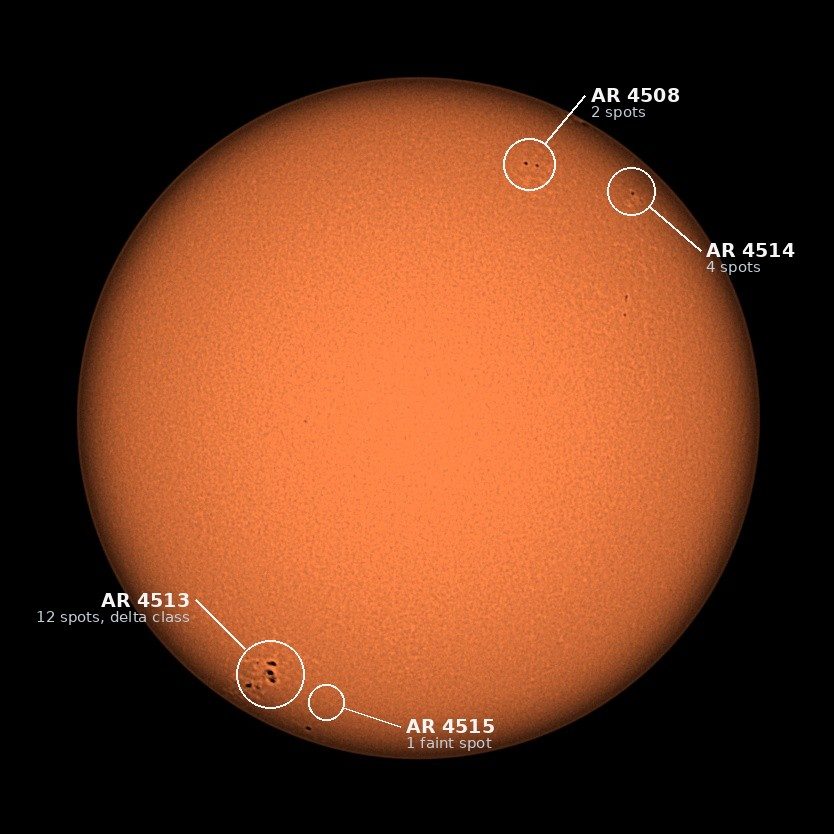
- The magnetic solar filter, and a pouch for it. The only thing that makes the Sun safe. See below.
- A carrying bag, a USB C cable and a wipe cloth for the front glass.
The Astro, Duo-Band and VIS filters are inside the Dwarf and chosen in the app: nothing to fit and nothing to lose in the dark. There is no tripod in the box.
The solar filter
A tripod: the one thing you have to buy
- Any camera tripod with the standard 1/4 inch screw fits. DWARFLAB also sell their own small hydraulic tripod.
- Steady matters more than tall. Wind or a wobbly tripod smears the stars. Keep it low, legs spread, on firm ground.
- For EQ mode the Dwarf is tilted to your latitude (about 52 to 55 degrees in Britain) and pointed north. A tripod head that tilts and locks firmly makes this easy; a three way head is steadier than a ball head. Practise it in daylight. See EQ mode.
- Level first. A bubble level on the tripod, or the one in the app, before anything else.
A Bahtinov focusing mask
A disc with slots cut in it that clips on the front. Point at a bright star and the slots turn it into an X with a bar through the middle. When the bar sits dead centre, you are focused; which side it is on tells you which way to go.
- Point at a bright star with the tele camera, and tap AF to get close.
- Clip the mask on, then tap + or − one press at a time and watch the bar move through the X.
- Stop when the bar is centred, and write the focus number down. If it gets knocked later, put the number back instead of starting again.
- Take the mask off before you start the run, or every star keeps the spikes.
Focus drifts as the air cools, so recheck partway through a long night. Night only, never on the Sun: it blocks almost nothing.
A lens shade
A short tube that clips on the front, like the hood on a camera lens. Two real jobs:
- It slows dew. The Dwarf has no dew heater. A tube in front means the glass sees less of the cold sky, so dew forms later. On a still, damp night that can mean carrying on past 1am.
- It blocks light from the side: a security light, a window, headlights.
It does nothing for a town's glow, which comes from the whole sky. In wind it catches the breeze: if stars look soft on a gusty night, take it off and compare. Night only: it is not a solar filter.
The mask and the shade use the same magnetic ring as the solar filter, so expect one at a time.
A power bank
The Dwarf runs about six hours on its own battery, and cold nights drain it faster. It can run while charging from a USB C power bank, so a long winter night needs one. Fast charging wants a USB C to USB C power bank that does PD (power delivery).
An external drive
The Dwarf holds about 110 GB and fills in about four long nights. Copy each night to a computer and to an external drive, so there are two copies. How to back it up.
A red torch
White light costs you twenty minutes of night eyes every time. A red torch, and this site's red light mode, keep them.
Things that are not needed
- Extra filters for the night. The three inside cover it: Astro for galaxies and clusters, Duo-Band for nebulae, VIS for daytime.
- Anything for light pollution from a town. Only a darker place helps. Duo-Band nebulae are the exception: they cut through it well.
Third party magnetic kits (shades, masks, lens caps) are also sold for the Dwarf 3. They are not made by DWARFLAB. Check they fit the Dwarf 3, not the Dwarf 2.